Boston Moving Day is the unofficial name for the major apartment turnover that happens around September 1. On this date, many leases across Boston expire and new leases begin. Because Boston has a large student population and a high number of rental apartments, thousands of people move in and out of the city within a very short period of time.
The busiest areas often include neighborhoods with many renters and students, such as Allston, Brighton, Fenway, Back Bay, Mission Hill, South End, Cambridge, Somerville, Brookline, and parts of Boston near major universities.
Locals also know part of this tradition as “Allston Christmas.” This nickname comes from the large amount of furniture, household items, and unwanted belongings that appear on sidewalks when people move out. Some items are left for disposal, while others are picked up by new renters trying to furnish an apartment. It is a very Boston-specific tradition, but it also creates extra traffic, clutter, safety concerns, and city cleanup needs.
For anyone planning a move, the main thing to understand is simple: September 1 is not a normal moving day in Boston. It is the peak of the peak season.
Why Does Everyone Move on September 1 in Boston?
The short answer is: leases.
Boston’s rental market has long been shaped by the academic calendar. With so many universities, graduate programs, hospitals, and research institutions in the area, many renters move at the end of summer before classes and fall schedules begin. Over time, September 1 became the standard lease start date for a large share of apartments.
That pattern creates a chain reaction:
- Landlords schedule lease turnovers for September 1.
- Students and renters plan move-ins around that date.
- Moving companies book up earlier than usual.
- Parking permits become harder to secure.
- Truck access becomes more complicated.
- Traffic increases across residential neighborhoods.
- Costs can rise because demand is extremely high.
Even if you are not a student, you may still be affected by the September 1 moving rush if your lease follows the same cycle.
Why Boston Moving Day Is So Challenging
Moving in Boston can already be complicated. The city has narrow streets, older buildings, tight staircases, limited parking, one-way roads, loading restrictions, and dense neighborhoods. On September 1, all of those challenges happen at the same time.
Here are the biggest issues customers should expect.
1. Moving Companies Book Quickly
September 1 is one of the first dates to disappear from a moving company’s schedule. Many people begin requesting quotes weeks or even months in advance. If you wait until late August, you may have fewer available time slots, fewer crew options, and higher stress.
If you know you need to move on September 1, try to book your moving company as early as possible. If your dates are flexible, moving a few days before or after September 1 can make a major difference.

2. Parking Is Harder Than Usual
Parking is one of the biggest problems during Boston Moving Day. A moving truck needs safe and legal space close to your building. Without that space, movers may have to carry items farther, which can increase time, labor, and difficulty.
In many Boston neighborhoods, you may need a street occupancy permit or moving truck permit. These permits should be requested early, especially during the busy summer moving season.
If you are moving from or into a building with no driveway, no loading dock, or limited curb space, parking planning becomes even more important.
3. Traffic Can Delay the Move
On September 1, there are more trucks, rental vans, cars, students, parents, and pedestrians on the road. Neighborhoods like Allston, Brighton, Fenway, Back Bay, and Mission Hill can become especially congested.
Even a well-planned move can be affected by traffic. This is one reason why customers should avoid scheduling too many important tasks on the same day. Leave extra time for elevator use, building access, parking, and travel between locations.
4. Building Access Can Be Limited
Many apartment buildings have move-in rules, elevator reservations, loading areas, and property protection requirements. Around September 1, multiple tenants may be trying to move in or out of the same building on the same day.
Before moving day, confirm:
- Elevator reservation rules.
- Move-in and move-out time windows.
- Loading dock availability.
- Certificate of Insurance requirements.
- Building protection requirements.
- Parking or truck access instructions.
Good preparation can save hours on moving day.
Boston Moving Demand by Month
For planning purposes, we recommend thinking about Boston moving demand as a seasonal curve. The busiest period usually starts in late spring, rises sharply through summer, peaks around August and September, and then slows down in the fall.
Use this chart as an estimated seasonal demand index, where 100 represents peak moving demand.
Graph 1: Estimated Boston Moving Search & Booking Demand by Month
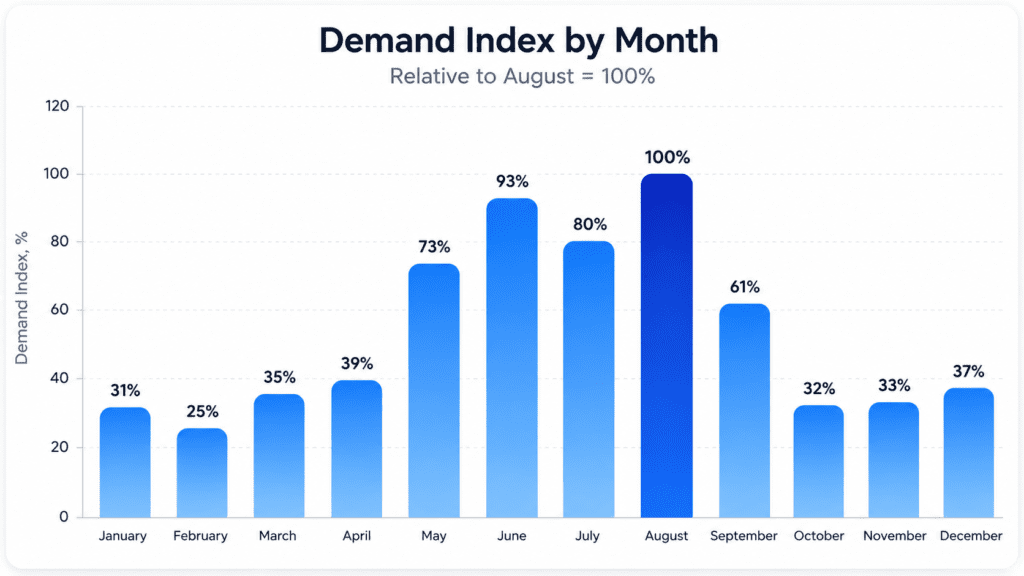
How to use this graph:
The best months for easier scheduling are usually winter and early spring. The hardest months are June, July, August, and September. If you are trying to save money or secure more flexible moving times, avoid the last week of August and September 1 whenever possible.
What Types of Moves Are Most Popular by Season?
Not every month has the same type of moving demand. Summer is usually dominated by apartment moves, student moves, and lease-related relocations. Commercial moves and long-distance moves can happen year-round, but they often require more planning.
Graph 2: Estimated Popular Move Types by Month
| Month | Apartment / Condo Moves | Home Moves | Storage-Related Moves | Labor-Only Moves | Commercial Moves |
|---|---|---|---|---|---|
| January | 76.6% | 9.7% | 9.0% | 4.1% | 0.7% |
| February | 78.8% | 8.5% | 7.6% | 2.5% | 2.5% |
| March | 67.1% | 19.8% | 8.4% | 2.4% | 2.4% |
| April | 67.8% | 16.4% | 11.5% | 2.2% | 2.2% |
| May | 73.5% | 12.2% | 9.9% | 3.8% | 0.6% |
| June | 67.0% | 19.2% | 7.6% | 4.3% | 1.8% |
| July | 63.8% | 17.6% | 12.2% | 6.4% | 0.0% |
| August | 70.7% | 12.7% | 12.3% | 3.4% | 0.8% |
| September | 63.5% | 12.3% | 18.2% | 5.6% | 0.4% |
| October | 64.5% | 21.1% | 9.9% | 0.7% | 3.9% |
| November | 64.3% | 15.3% | 14.6% | 4.5% | 1.3% |
| December | 61.5% | 20.1% | 13.2% | 3.4% | 1.7% |
Our internal move-date trends show that apartment and condo moves make up the largest share of Boston moves throughout the year. This is especially important around September 1, when the rental market creates a concentrated moving rush. Storage-related moves also rise in September, which often happens when move-out and move-in dates do not line up perfectly.
Is September 1 More Expensive for Moving?
Often, yes.
Moving prices depend on inventory, crew size, truck size, access conditions, travel time, packing needs, and scheduling demand. September 1 can be more expensive because demand is extremely high and available moving crews are limited.
That does not mean every September 1 move will cost the same. A small studio with easy parking is very different from a three-bedroom walk-up with no reserved truck space. But in general, customers should expect less flexibility and stronger demand around that date.
If you want a smoother and potentially more affordable move, consider these alternatives:
- Move a few days before September 1.
- Move a few days after September 1.
- Choose a weekday instead of a weekend.
- Avoid the last weekend of August.
- Book early to secure a better time window.
- Be fully packed before the movers arrive.
- Reserve parking as soon as possible.
The more flexible you are, the easier it is to plan.
Tips for Surviving Boston Moving Day
If your lease requires you to move on September 1, do not panic. A good plan makes a big difference.
Book Your Movers Early
For September 1 moves, early booking is one of the most important steps. Waiting too long can limit your options. As soon as your lease is confirmed, request a moving quote and provide as many details as possible.
Include:
- Pickup and delivery addresses.
- Apartment size.
- Floor level.
- Elevator access.
- Parking situation.
- Large or heavy items.
- Packing needs.
- Preferred time window.
Reserve Parking
Do not assume there will be space for the truck. In Boston, parking can decide how smooth or stressful your move becomes. If your building does not have a driveway or loading area, check whether you need a city permit.
A reserved spot can reduce carrying distance, save time, and make the move safer.
Pack Before Moving Day
September 1 is not the day to finish packing. Boxes should be closed, labeled, and ready before the crew arrives. Loose items, open containers, and unfinished packing can slow down the move.
Label boxes by room and keep essentials separate. If you need professional packing help, schedule it in advance.
Confirm Building Rules
Some Boston buildings require elevator reservations, move-in certificates, or specific moving hours. Ask your landlord or property manager about these rules before moving day.
If your building requires a Certificate of Insurance, notify your moving company early so it can be prepared before the move.
Avoid Curbside Furniture
“Allston Christmas” may be famous, but curbside furniture can come with risks. Items left outside may be damaged, dirty, unsafe, or affected by pests. If you need furniture, it is safer to inspect carefully or buy from a trusted source.
If you are getting rid of furniture or mattresses, follow city disposal rules instead of leaving items wherever convenient.
Should You Avoid Moving on September 1?
If you have the choice, yes, we usually recommend avoiding September 1.
That does not mean moving on September 1 is impossible. It simply means you should understand what comes with the date: high demand, more traffic, limited parking, tighter scheduling, and more planning pressure.
If your lease allows flexibility, moving on August 28, August 29, September 3, or September 4 may be much easier. Even shifting your move by one or two days can help.
If you cannot avoid September 1, the best strategy is to prepare early and work with movers who understand Boston’s busiest moving period.
How Raimond’s Movers Helps During Boston Moving Day
Our team has experience with Boston apartments, tight streets, walk-ups, elevators, parking challenges, and busy move-in periods. We help customers plan the practical details before the crew arrives, so moving day is less chaotic.
For September 1 moves, we focus on:
- Clear scheduling.
- Proper crew and truck planning.
- Parking and access preparation.
- Furniture protection.
- Efficient loading and unloading.
- Communication before and during the move.
- Careful handling in apartments, condos, and older buildings.
Boston Moving Day is busy, but it does not have to feel impossible. With the right preparation, the right timing, and the right moving team, you can get through it with much less stress.
Final Thoughts
Boston Moving Day is one of the most unique moving traditions in the country. Every September 1, the city experiences a massive wave of lease turnovers, student move-ins, traffic, parking pressure, and neighborhood activity.
If you are planning a move around this date, the best advice is simple: start early, stay organized, reserve parking, confirm building rules, and avoid September 1 if your schedule allows it.
And if you do need to move during the busiest week of the year, choose a moving company that knows Boston well. A prepared crew can make the difference between a stressful move and a smooth one.
Planning a move in Boston? Contact Raimond’s Movers for a clear quote and professional moving support.