Fall move-in day always feels close until suddenly it isn’t. This is the checklist we actually hand new customers — built from what our crews see go right (and wrong) on hundreds of Boston moves every year, not a generic list copied from somewhere else.
We’ve been moving households and apartments around Boston since 2008, through narrow Beacon Hill streets, fourth-floor Allston walk-ups, and everything in between. Below is a week-by-week plan, plus real advice from the people who load the truck.
Want this checklist on your fridge? Download the free printable PDF version — the same week-by-week checklist, ready to check off by hand.
Your Fall Moving Timeline at a Glance
- 6–8 weeks out: book your movers, start decluttering, research your new area.
- 4 weeks out: begin packing non-essentials, order supplies, confirm building rules.
- 2 weeks out: apply for parking permits, start using up food, confirm your final quote.
- 1 week out: finish packing, pack an essentials bag, confirm details with your crew.
- Moving day: final walkthrough, protect floors, do a last check before the truck pulls away.
- First week after: update your address, register utilities, unpack room by room.
6–8 Weeks Before Moving Day
- Book your moving company. Fall dates fill up fast right after Labor Day, so lock in your crew early.
- Walk through every room and decide what’s coming with you. Fewer items means a faster, cheaper move.
- Research your new neighborhood: parking rules, trash/recycling days, and building access.
- Start using up frozen and perishable food so there’s less to deal with later.
- If you’re changing school districts, start that paperwork now — it usually takes longer than expected.
From our crew: the single biggest scheduling mistake we see is waiting until three weeks out to book a fall move. Late September and October fill up faster than people expect, especially on weekends — call early and you’ll have your pick of times.
4 Weeks Before Moving Day
- Order boxes, tape, and wrap — or confirm packing materials with your moving company.
- Start packing items you won’t need in the next month: off-season clothes, books, decor.
- Confirm your new building’s move-in rules: elevator reservations, move-in windows, Certificate of Insurance.
- Notify your landlord of your move-out date in writing if you haven’t already.
- Start a “keep vs. donate vs. toss” pile as you pack — don’t pack things you’re only going to unpack and get rid of later.
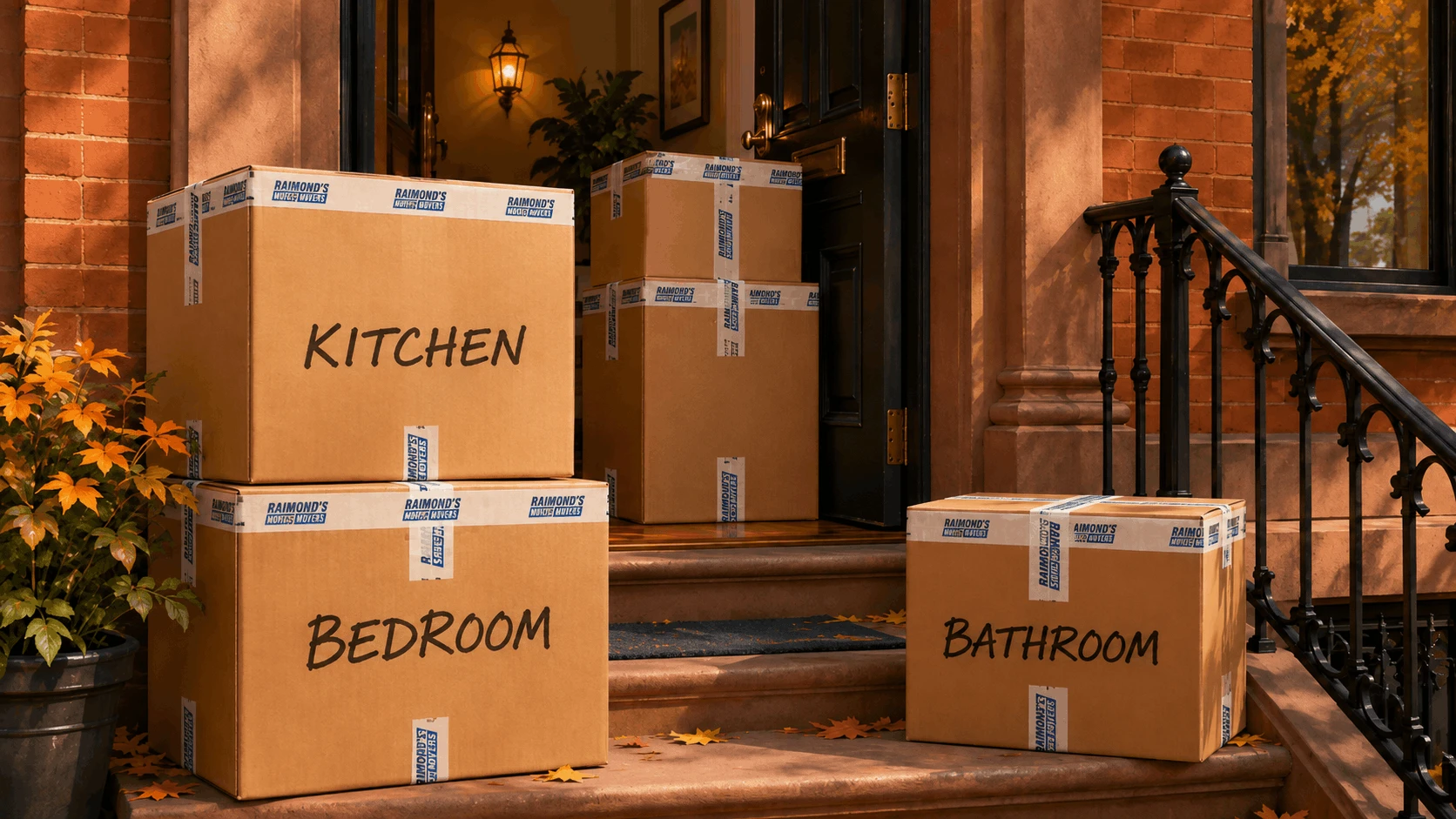
From our crew: label boxes by room, not by category. “Kitchen” gets a box to the kitchen faster than “Glassware” does — and it means our team can place boxes in the right rooms without asking you where everything goes.
2 Weeks Before Moving Day
- Apply for a street occupancy or moving truck permit if your building has no driveway or loading area — Boston permits can take 1–2 weeks to process.
- Confirm your final quote and moving day details with your movers, including arrival window and access notes.
- Start eating down your pantry and finish using cleaning supplies you won’t take with you.
- Arrange for pets or kids to be elsewhere on moving day if possible, or plan a safe space for them.
- Set aside important documents, medications, and valuables to move yourself, not on the truck.
From our crew: parking is the single biggest variable in how smooth a Boston move day goes. If your street doesn’t have obvious truck space, get the permit — it’s a lot cheaper than the extra labor time from carrying boxes an extra block.
1 Week Before Moving Day
- Finish packing everything except what you’ll need in the final 24 hours.
- Pack a clearly labeled essentials bag: chargers, medications, a few days of clothes, toiletries, snacks.
- Take photos of electronics setups before you disconnect cables.
- Disassemble anything you’re comfortable taking apart yourself — it saves time on moving day.
- Confirm parking, elevator reservations, and building access one more time with both buildings.
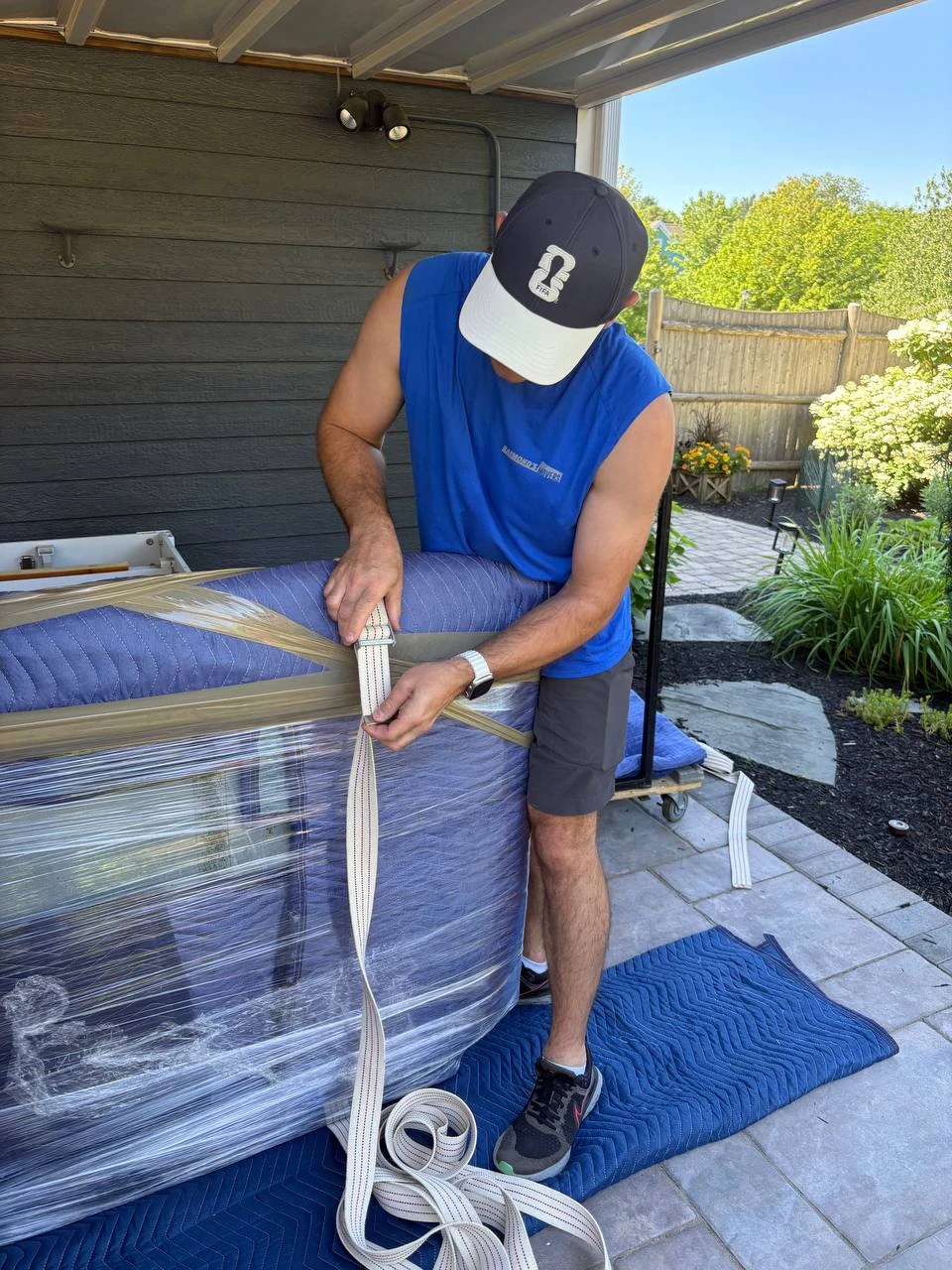
From our crew: wrap upholstered furniture and mattresses before moving day if you can, especially in the fall. Wet leaves and drizzle are common in October, and pre-wrapped furniture stays clean even if the weather doesn’t cooperate.
Moving Day Checklist
- Do a final walkthrough of every room, closet, and cabinet before the crew starts loading.
- Point out anything fragile, high-value, or requiring special handling before loading begins.
- Keep your essentials bag, documents, and valuables with you, not on the truck.
- Protect floors near the entrance — fallen leaves and rain make hallways and stairs slippery.
- Do a final sweep of the old place, including closets, cabinets, and outdoor storage, before the truck leaves.
- Confirm the delivery address and any access notes with your crew before they head to the new place.
From our crew: the most common thing people forget is checking high shelves in closets and the top of the fridge. Do one more sweep after you think you’re done — it takes two minutes and saves a trip back later.
The First Week After You Move
- File a change of address with USPS and update it with your bank, employer, and subscriptions.
- Register your car and apply for a resident parking permit if you’ve moved within Boston.
- Set up or transfer utilities: electric, gas, internet, and renter’s insurance.
- Locate your circuit breaker, water shutoff, and any building emergency contacts.
- Unpack room by room, starting with the kitchen and bedroom — the rooms you’ll need most in the first 48 hours.
- Break down and recycle boxes as you go so they don’t pile up.
From our crew: unpack the kitchen and bathroom first, even if the living room is more tempting to set up. You’ll actually use those two rooms within hours of moving in, and it makes the first night feel a lot more livable.
Fall-Specific Packing Tips From Our Movers
A few things change once the weather turns. Here’s what our crews specifically watch for on fall moves in Boston:
- Protect electronics from temperature swings. Don’t leave TVs or computers in a cold truck or garage overnight — let them adjust to room temperature before powering on.
- Use plastic bins for anything going into storage. Cardboard absorbs moisture faster in fall’s damp weather; plastic totes hold up better if items sit for a while.
- Wrap mirrors and art before the truck, not on the sidewalk. A sudden shower can ruin cardboard packaging in minutes.
- Bring a change of shoes. Wet leaves and rain make floors slippery — dry shoes for the new place keep you from tracking mud through a house you haven’t even moved into yet.
- Pack a small tool kit separately. You’ll want a screwdriver and Allen wrench accessible on day one, not buried in a box labeled “Misc.”
Common Mistakes We See Boston Renters Make
After thousands of moves, a handful of mistakes come up again and again. Avoiding these alone will make your move noticeably smoother:
- Booking too late. Waiting until the week of your move to find a mover means fewer available time slots and less room to negotiate.
- Underestimating stairs and long carries. A third-floor walk-up with no elevator takes real time — mention it when you get your quote.
- Packing the night before. Rushed packing leads to more breakage and a slower moving day.
- Forgetting to measure doorways and stairwells. Large furniture that doesn’t fit through a doorway is one of the most common moving-day surprises.
- Not asking about parking until the morning of the move. By then, it’s often too late to get a permit in time.
Frequently Asked Questions
How many weeks before a move should I start packing?
Start packing non-essential items about 4 weeks before your move, and finish everything except your essentials bag by the day before. Starting early spreads the work out and avoids a rushed, stressful final week.
What’s the best way to label moving boxes?
Label each box by the room it’s going to, not just its contents. Room-based labels let your moving crew place boxes directly where they belong, and they make unpacking far more predictable.
Do I need a parking permit for a moving truck in Boston?
If your building doesn’t have a driveway or dedicated loading area, you likely need a street occupancy or moving truck permit from the city. Apply at least 1-2 weeks ahead, since processing can take time, especially during busy moving periods.
What should I pack in a moving day essentials bag?
Pack chargers, medications, a few days of clothes, toiletries, basic tools, important documents, and snacks. Keep this bag with you rather than on the truck so you have everything you need before boxes are unpacked.
Should I be home for the entire move?
It’s best to be present at both the start and end of your move, even if you step out in between. Being there for the initial walkthrough and the final sweep helps make sure nothing is missed.
Final Thoughts: A Little Planning Goes a Long Way
None of this is complicated on its own — it’s just easy to underestimate how many small tasks a move actually involves. Working through this checklist a little at a time, starting six to eight weeks out, is what separates a calm fall move from a chaotic one.
Want more on timing your move around Boston’s busiest weeks? See our guides to fall moving in Boston and what a fall move typically costs. If you need somewhere to keep things in the meantime, our guide to temporary storage covers your options.
Don’t forget: you can download the printable PDF version of this checklist and keep it somewhere you’ll actually see it — the fridge, a kitchen drawer, or taped inside a moving box.
Ready to check “book the movers” off your list? Contact Raimond’s Movers for a personalized quote for your fall move.