Moving rarely lines up perfectly. Your lease might end before your new place is ready, a closing gets pushed back, or you’re mid-renovation with nowhere to put the living room furniture. When that happens, the question isn’t just “do I need storage” — it’s which kind.
We’ve coordinated storage for thousands of Boston moves since 2008, and the short answer is: short-term and long-term storage solve different problems, and they’re usually handled by different kinds of providers. This guide breaks down the real differences, how to tell which one you need, and what to check before you book either one.
Quick Answer
If your storage need is tied to an active move — a gap between move-out and move-in, a renovation, a delayed closing — you want short-term storage, usually handled by your moving company as part of the job. If you’re storing items with no move currently happening — downsizing, deployment, long-term travel — you want long-term storage at a dedicated self-storage facility. Below is the full breakdown.
What’s the Difference Between Short-Term and Long-Term Storage?
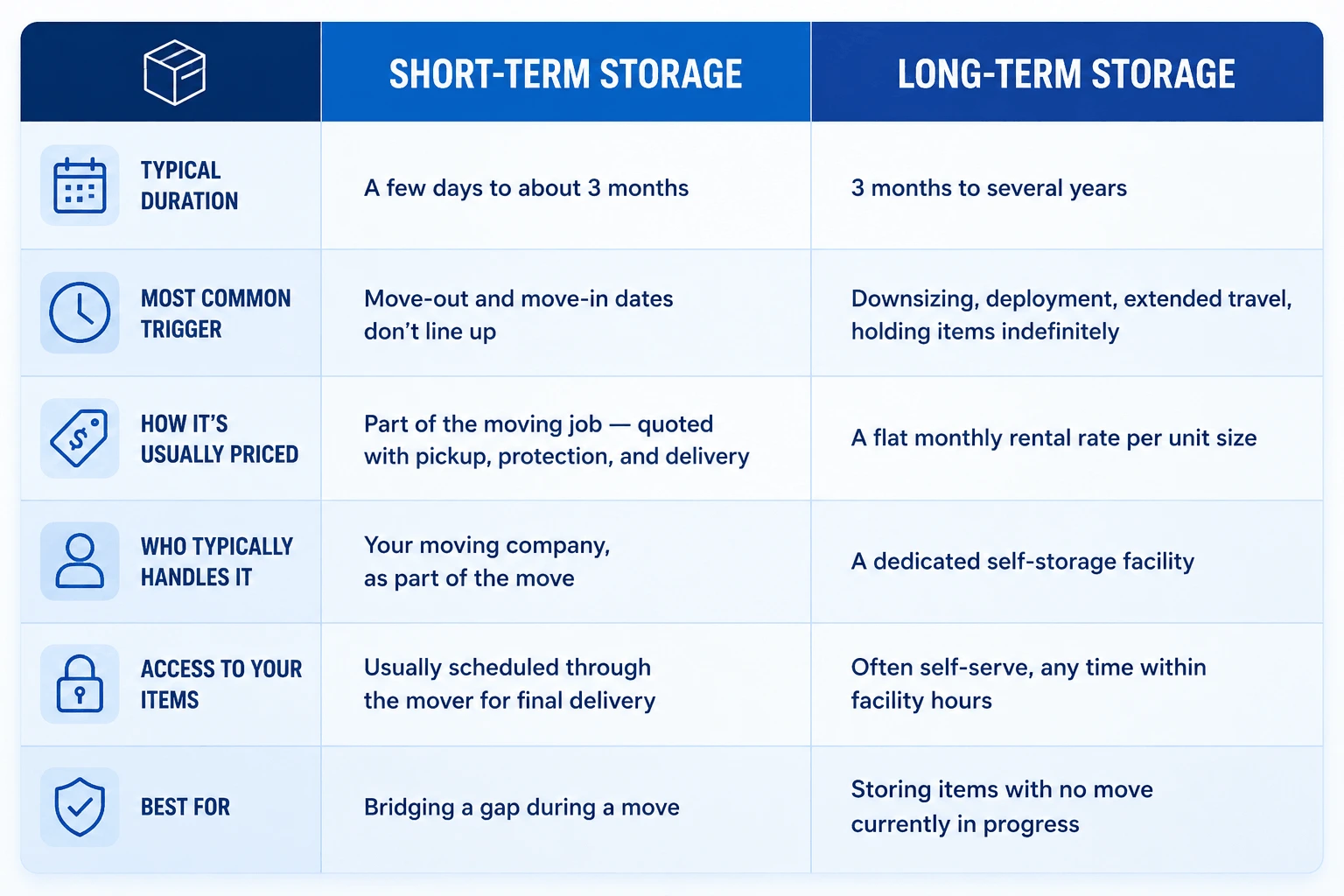
The line isn’t just about time — it’s about how the storage is structured and who handles it.
Short-term storage (sometimes called storage-in-transit, or SIT) is almost always tied to an active move. It typically runs from a few days up to around three months, and it’s usually coordinated by the moving company itself: your items are picked up, protected, held, and delivered once your new place is ready. You’re not renting a unit and managing access yourself — it’s part of the move.
Long-term storage is different. It’s for items that need to sit somewhere for months or years, independent of any specific move date. This is the world of dedicated self-storage facilities, where you rent a unit at a flat monthly rate and typically manage your own access.
Why Storage Gaps Happen So Often in Boston
Boston’s rental and real estate market creates storage gaps more often than most cities. A huge share of local leases turn over on September 1 — a date so consistent it has its own nickname. When move-out and move-in dates don’t match exactly (which is common when you’re not moving directly between two rentals on the same cycle), short-term storage bridges the difference. See our full breakdown of Boston Moving Day and the September 1 rush for why this date drives so much of the local market.
Beyond the lease calendar, we regularly coordinate storage around home closings that shift by a few weeks, renovation timelines that run long, and downsizing projects where someone needs time to sort through a house before deciding what stays.
Signs You Need Short-Term Storage
- Your move-out date is set, but your new place isn’t ready yet.
- You’re closing on a home and the dates don’t line up with your lease.
- You’re renovating and need furniture out of the way for a few weeks or months.
- You’re moving in stages — some items now, the rest later.
- You know roughly when you’ll need everything delivered, even if it’s not locked in yet.
Signs You Need Long-Term Storage
- You’re downsizing and keeping items you’re not ready to part with, but won’t need soon.
- You’re relocating for work or military service and won’t have a permanent address for a while.
- You’re storing seasonal items, business inventory, or belongings with no move attached at all.
- You want ongoing, self-serve access to your things on your own schedule.
- There’s no target delivery date — the timeline is open-ended.

What to Look For in a Boston Storage Provider
Whether you go with short-term storage through your movers or a long-term self-storage unit, the same fundamentals matter — and New England weather makes some of them non-negotiable.
- Climate control. Boston summers get humid and winters get well below freezing. Non-climate-controlled storage can warp wood, damage electronics, and encourage mold on fabric and upholstery.
- Security. Look for gated access, cameras, and individually secured units or containers, not just a locked warehouse door.
- Insurance coverage. Ask exactly what’s covered and what isn’t — many providers offer only minimal default coverage unless you add more.
- Pest control. A facility should have an active pest management program, especially for long-term storage.
- Clear access policy. Know upfront whether you can access your items anytime, by appointment only, or only at final delivery.
From our crew: the items people most often forget need extra protection in storage are mattresses, upholstered furniture, and anything wood. Humidity swings between a Boston summer and winter are hard on all three — ask specifically about climate control if your storage window runs more than a few weeks.
How Raimond’s Movers Handles Storage During a Move
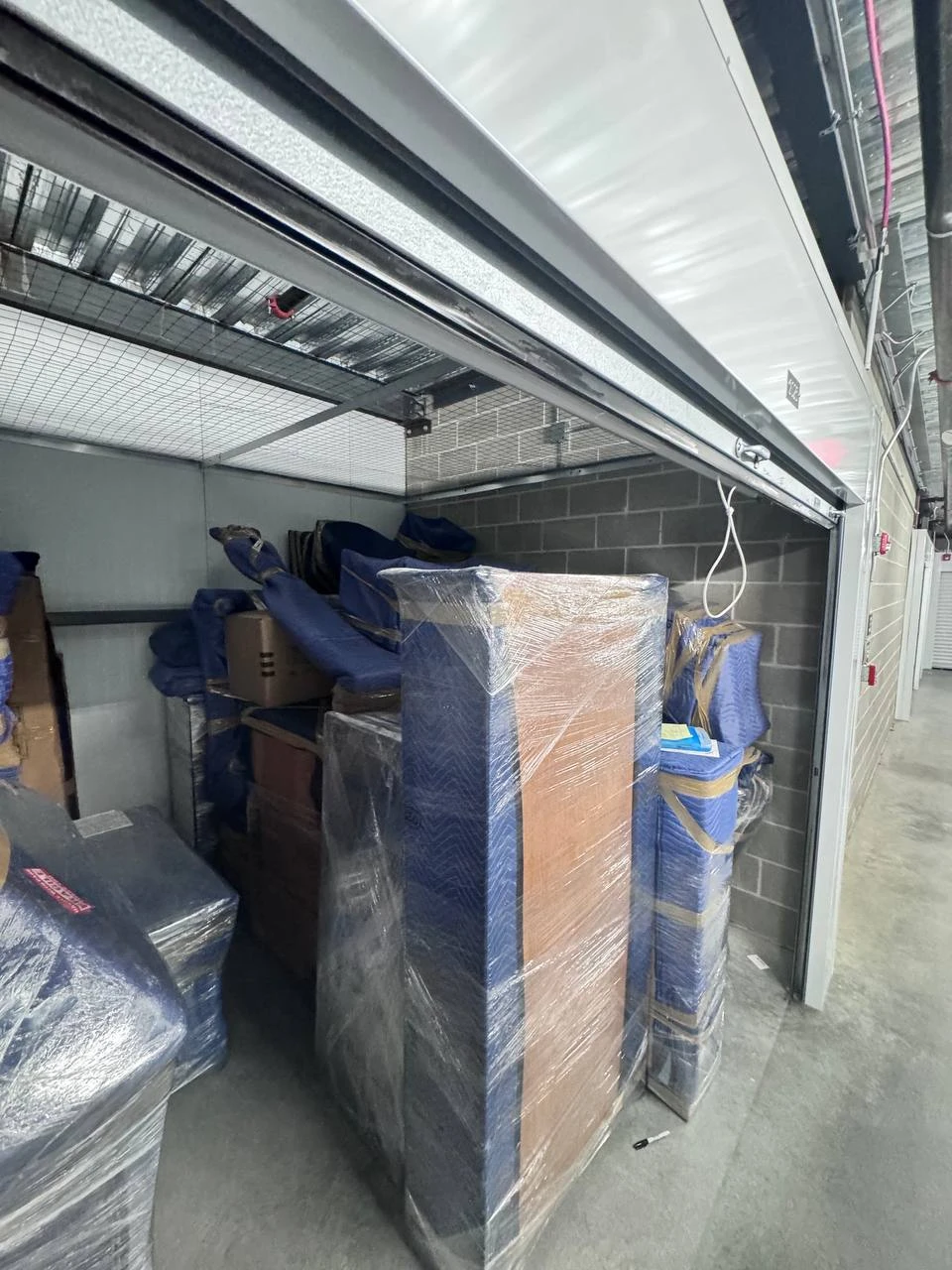
Our storage is built for the short-term, move-related situations above: we pick up, protect, wrap, and store your items, then coordinate final delivery once your new place, office, or renovation is ready. Everything is priced around your actual move — your inventory, how much packing is involved, how long storage is needed, and your expected delivery window — so you get a real number instead of a generic rate. See our full moving and storage service for the details.
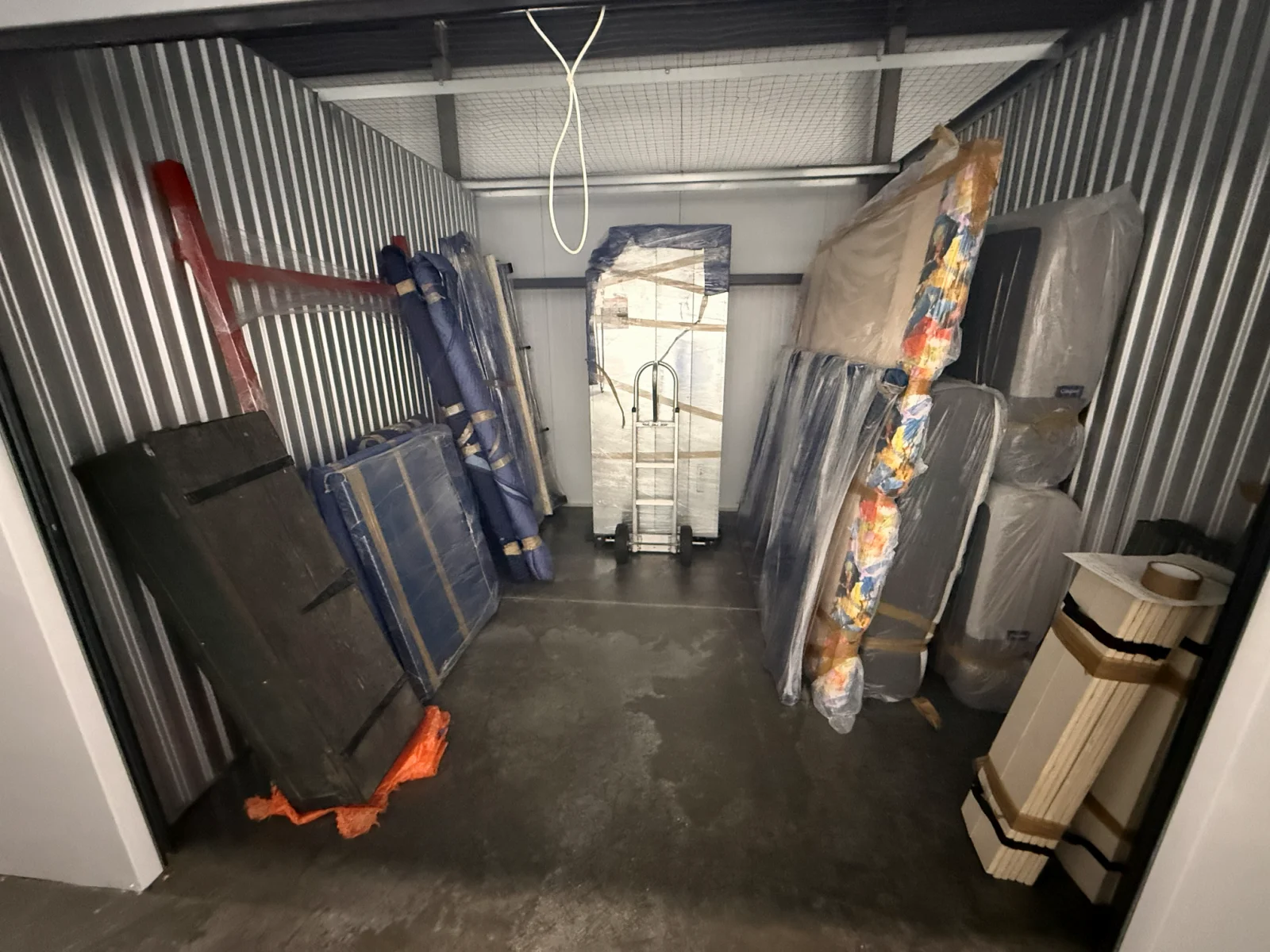
We’ll say this plainly: if you need storage that isn’t attached to a move — long-term, open-ended, fully self-serve — a dedicated self-storage facility is usually the better fit, and we’d rather point that out than force a square peg into a round hole. For anything tied to an actual relocation, though, coordinating it through your movers means one point of contact instead of two, and one team responsible for your things from pickup to delivery.
Real Storage Scenarios We See in Boston
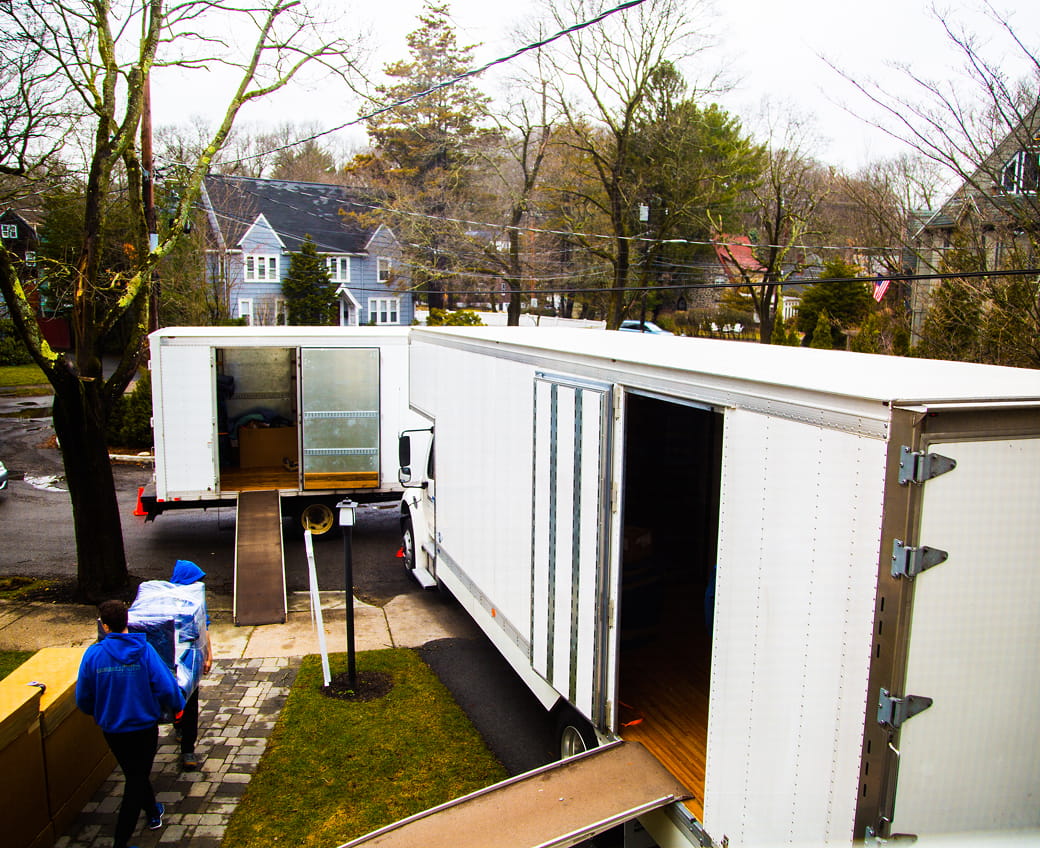
The lease-gap move. A tenant’s old lease ends August 31, but the new apartment isn’t available until September 5. We store their belongings for five days and deliver as soon as the new unit is ready — no separate storage company involved.
The renovation hold. A homeowner is refinishing floors and repainting before moving in. We store furniture and boxes for about six weeks while the work finishes, then deliver everything once the space is ready.
The downsizing sort. Someone selling a family home needs a few months to decide what to keep before moving into a smaller place. Past a certain point, this shifts from a “moving” problem into a long-term storage need — and we’re upfront when that’s the case.
Frequently Asked Questions
What is short-term storage during a move?
Short-term storage, sometimes called storage-in-transit or SIT, is temporary storage coordinated by your moving company when your move-out and move-in dates don’t line up. Your items are picked up, protected, stored, and delivered once your new space is ready, typically within a few days to a few months.
How long can I use short-term moving storage?
Most short-term moving storage covers anywhere from a few days up to around three months. If you need storage for longer than that with no move currently in progress, a long-term self-storage facility is usually a better and more cost-effective fit.
Is short-term storage more expensive than long-term storage?
It depends on how it’s priced. Short-term moving storage is usually quoted as part of your overall move based on inventory and timing, while long-term storage is priced as a flat monthly unit rental. For a brief gap between moves, short-term storage through your mover is often simpler and more cost-effective than renting a separate unit.
Do I need climate-controlled storage in Boston?
For anything beyond a few weeks, yes, it’s worth prioritizing. Boston’s humid summers and freezing winters can damage wood furniture, electronics, and upholstered items in non-climate-controlled storage. It matters even more for long-term storage.
Can I store only some of my belongings during a move?
Yes. You don’t have to store everything. Many people store extra furniture, seasonal items, or boxes they won’t need right away, while keeping essentials with them through the move.
Final Thoughts: Match the Storage to the Situation
The right storage choice comes down to one question: is this tied to a move, or not? If yes, short-term storage coordinated through your movers is almost always the simpler path. If your timeline is open-ended and there’s no move in progress, a dedicated long-term facility will usually serve you better and cost less over time.
For more on planning around Boston’s busiest moving stretches, see our guides to Boston Moving Day and fall moving in Boston, or read more about how our short-term storage service works.
Have a move with a storage gap in the middle? Contact Raimond’s Movers for a quote that covers pickup, storage, and delivery in one plan.